Gate Motor Repairs in Zimbabwe
Practical fault finding for sliding gates, swing gates, motors, batteries, controls, limits and the physical movement of the gate.
An automatic gate that will not open, will not close, stops halfway or moves slowly does not always have a failed motor. Resistance in wheels, tracks, hinges or alignment can place excessive load on the operator. A useful repair assessment therefore starts with the complete gate before electrical or control components are blamed.
Garage Door & Gate Motor Company assesses gate movement, motor operation, batteries, incoming power, remotes, receivers, limit behaviour and related automation components for suitable repair options.
What a Gate Motor Fault Can Look Like
The visible symptom is a starting point, not a diagnosis. The same behaviour can come from mechanical resistance, unstable power, a control problem or a setting that no longer matches the gate’s movement.
Gate Not Opening or Closing
The motor may not receive a valid command, the battery or supply may be weak, a safety input may be active, or the physical gate may be difficult to move.
Motor Runs but Gate Does Not Move
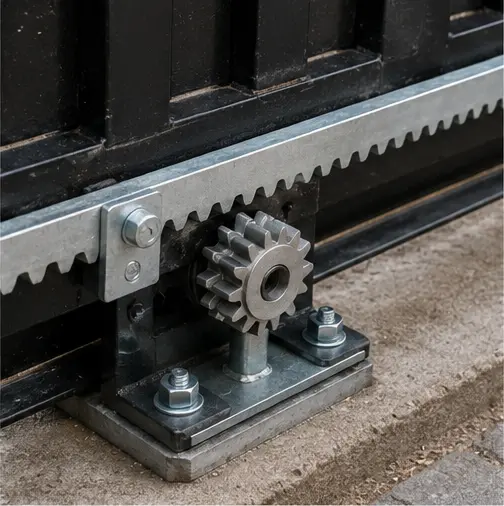
Drive engagement, rack contact, arms, brackets or another mechanical connection should be checked before the motor itself is condemned.
Gate Stops Halfway
Changing resistance, limit behaviour, battery voltage under load or an obstruction-related input can interrupt the cycle.
Slow or Noisy Operation
Noise and reduced speed can point to gate resistance, worn movement components, poor alignment or an operator working harder than it should.
Remote or Receiver Problems
A remote issue may involve the transmitter, receiver, programming, interference or the control board rather than the gate motor mechanism.
Repeated Opening or Closing
Unintended commands, limit inputs, safety devices or control faults need structured testing instead of repeated resetting.
Why the Physical Gate Must Be Checked First
A gate motor is designed to move a gate that travels freely and follows its intended path. If sliding-gate wheels bind, the track is damaged, a rack is poorly aligned, or swing-gate hinges and posts have moved, the operator must overcome extra load during every cycle.
That load can imitate an electrical fault, shorten battery performance and make limit behaviour inconsistent. Disconnecting the drive for a controlled manual-movement assessment helps separate gate resistance from automation faults.
- Sliding-gate track, wheels, rack contact and alignment
- Swing-gate hinges, posts, brackets and arm geometry
- Obstructions, damaged stops and changes across the full travel
- Motor mounting, drive engagement and visible mechanical wear
Fault Finding for Different Gate Types
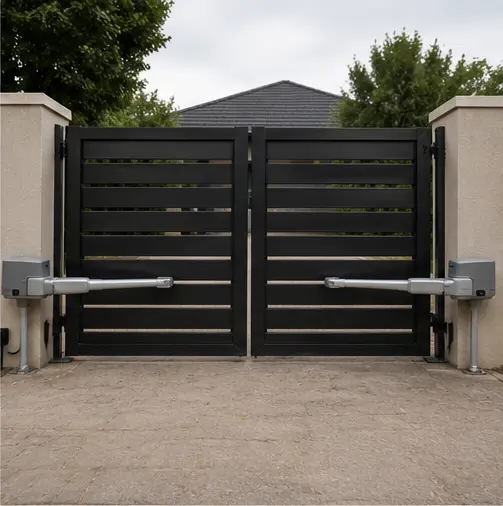
Sliding and swing gates place different demands on their automation. Repair decisions should follow the gate’s actual geometry and movement.
Sliding Gate Motor Repairs
Checks may cover wheel movement, track condition, rack-and-pinion contact, drive engagement, end stops, limits and motor load throughout the travel.
Swing Gate Motor Repairs
Checks may cover hinges, post movement, brackets, operator arms, leaf alignment, opening angles, stops and the load on single or double leaves.
Gate Opener and Control Repairs
The assessment can include control inputs, receivers, remotes, limit signals and compatible safety or access-control equipment where fitted.
Batteries, Power Supply, Remotes and Limits
Battery condition cannot be judged only by an idle voltage reading. A weak battery may appear normal until the motor draws current. Charging performance, connections and the wider power path also affect reliable operation.
Remote problems require the command path to be followed from transmitter to receiver and controller. Limit problems can cause incomplete travel, repeated stopping or movement beyond the intended position. Settings should only be changed after the physical gate and sensing inputs have been checked.
- Battery condition and performance under operating load
- Charging, incoming supply and visible connection condition
- Remote transmitters, receiver response and control inputs
- Open and close limit behaviour across a complete cycle
- Safety inputs or access devices fitted to the system
When Repair May Be Suitable and When Replacement May Be Considered
Replacement should not be the automatic answer to every fault. The condition of the gate, operator, controls, power system and available compatible components should guide the decision.
Repair May Be Suitable
A repair may be practical when the cause can be isolated, the physical gate is serviceable and the required component or adjustment is appropriate for the existing system.
Replacement May Need Consideration
Replacement may be discussed where major components are extensively damaged, the operator is unsuitable for the gate, or repeated failures reflect a wider system mismatch.
Gate Work May Be Needed First
If the gate is binding, unstable, poorly aligned or structurally unsound, correcting the physical movement may be necessary before motor work can be assessed properly.
From Reported Symptom to Repair Decision
A structured sequence reduces guesswork and avoids replacing parts before the cause is understood.
Describe the Fault
Explain what the gate does, when the behaviour began and whether it changes during the cycle.
Inspect the Gate
Check the gate type, movement path, wheels or hinges, alignment, stops and visible damage.
Test the Automation
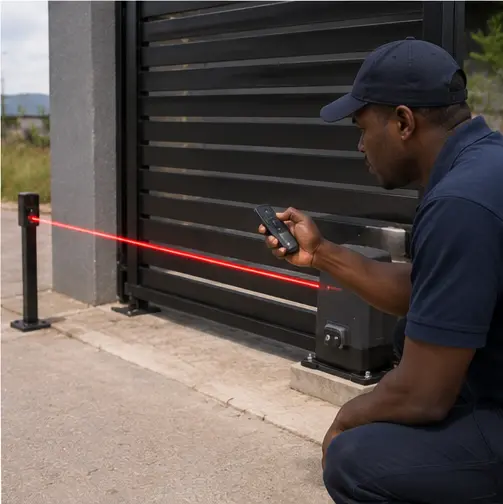
Observe motor load, power, batteries, controls, limits and relevant inputs during safe operation.
Isolate the Cause
Separate mechanical resistance from motor, power, receiver, controller or setting-related problems.
Discuss the Work
Explain a suitable repair, required gate work or replacement consideration without unnecessary parts changes.
Verify Operation
After approved work, check a complete open-and-close cycle and the operation of relevant controls.
Do Not Force an Unreliable Automatic Gate
Repeated operation can increase damage or create a safety risk when the gate is jammed, unstable or moving unpredictably.
Keep the Travel Area Clear
Keep people, vehicles and objects away from a gate that stops, reverses or moves without a predictable command.
Avoid Live Electrical Work
Do not open electrical enclosures or bridge control and safety circuits. Record the symptoms and arrange an assessment.
Use Manual Release Carefully
Only use a documented manual-release method when the gate is stable and can be controlled safely. Do not force a heavy or binding gate.
Gate Motor Repair Questions
Why is my gate motor running but the gate is not moving?
The drive may not be engaged correctly, rack or arm contact may be lost, or another mechanical connection may have failed. The physical gate and drive system should be checked together.
Can a weak battery cause a gate to stop halfway?
Yes. A battery can lose voltage under motor load, particularly when the gate has added resistance. Battery performance, charging and gate movement should all be assessed.
Why does the gate open but not close?
A close command, limit input, safety input, control setting or mechanical condition can interrupt closing. The exact cause requires testing rather than bypassing safety equipment.
Do remote-control problems always mean the motor is faulty?
No. The issue may involve the remote, receiver, programming, interference, power or the controller. Following the command path helps identify the correct cause.
Can a sliding or swing gate be repaired without replacing the motor?
Sometimes. If the operator remains suitable and the cause is a repairable component, setting or gate-movement problem, replacement may not be necessary. The system condition must be assessed first.
What information helps when requesting gate motor repairs?
Share the property location, gate type, visible symptoms, when the fault occurs and clear photographs of the gate and operator where practical.
Request a Gate Motor Fault Assessment
Contact Garage Door & Gate Motor Company about sliding gate motor faults, swing gate motor faults, battery and power problems, control issues, limit behaviour or an automatic gate that is not moving correctly.